Workplace Safety Isn’t Just About Compliance—It’s About Protecting Your Business
Insights from Mark Howe, Managing Director of i3net Member Howsafe
Across manufacturing, engineering, construction and industrial services, workplace safety has never been under greater scrutiny.
Regulatory expectations continue to evolve, technology is changing the way businesses manage risk, and organisations are being asked to demonstrate—not simply claim—that they are meeting their workplace health and safety obligations.
Recently, i3net CEO Bianca Perry sat down with Mark Howe, Managing Director of i3net Member Howsafe, to discuss the biggest challenges businesses face when managing workplace safety and what practical steps organisations can take to improve their systems and culture.
Watch the full interview below.
The biggest mistake businesses make
According to Mark, one of the greatest risks isn’t a lack of policies—it’s complacency.
Many businesses have operated safely for years and begin to believe “it won’t happen to us.” Combined with the classic Australian attitude of “she’ll be right” and the temptation to take shortcuts, this can slowly weaken even well-established safety systems.
“Strong safety management systems aren’t optional. They’re essential.”
Mark explained that relying on past performance isn’t enough. Businesses need robust systems that are consistently applied and regularly reviewed.
Technology is transforming workplace safety
One of the biggest changes Mark has witnessed throughout his career is the move away from paper-based systems.
Modern safety platforms provide businesses with real-time information, automated workflows, photo capture, action tracking and instant reporting—making it far easier to identify issues and ensure corrective actions are completed.
Rather than documents sitting in filing cabinets, technology allows businesses to maintain live records that are accessible when they need them most.
For organisations managing multiple sites, contractors or complex compliance requirements, these digital systems can significantly improve both efficiency and accountability.
Your people know where the risks are
If Mark could recommend just one action to improve workplace safety, it would be simple:
Talk to your people.
Workers often have the clearest understanding of where safety risks exist, yet many businesses don’t actively involve them in identifying improvements.
Consultation isn’t simply good leadership—it’s also a legal requirement for businesses operating under Australian workplace health and safety legislation.
Creating an environment where employees feel heard not only strengthens compliance but also builds a stronger safety culture across the organisation.
Regulators are becoming more active
Businesses across NSW are also seeing increased activity from workplace safety regulators.
Mark noted that inspectors are conducting more proactive compliance visits and issuing improvement notices and penalties where businesses cannot demonstrate they are meeting their legal obligations.
Importantly, it’s no longer enough to simply say safety processes exist.
Businesses must be able to produce clear evidence that appropriate training, consultation, supervision and safety management systems are in place.
As Mark explains, demonstrable evidence is becoming increasingly important during audits and regulatory inspections.
Safety culture can be recognised in minutes
When asked how he assesses a workplace, Mark’s answer wasn’t to begin with paperwork.
Instead, he looks at the workplace itself.
Housekeeping, organisation and cleanliness often provide an immediate indication of whether safety is genuinely embedded into everyday operations.
He also spends time speaking directly with employees.
Do they feel comfortable raising concerns?
Do they believe management listens?
Do they understand their responsibilities?
These conversations often reveal far more than policies sitting on a shelf ever could.
A practical starting point
For businesses unsure where they stand, Mark recommends beginning with a workplace safety health check or gap analysis.
Rather than assuming everything is compliant, this process identifies what’s working well, highlights any compliance gaps and provides a practical roadmap for improvement.
It’s an approach designed to build on existing strengths while ensuring businesses remain compliant with evolving workplace health and safety requirements.
Supporting safer workplaces across the i3net network
At i3net, we’re committed to connecting members with expertise that helps strengthen their businesses.
Workplace safety is fundamental to every industrial business, and we thank Mark Howe and the Howsafe team for sharing their practical insights with our network.
Whether you’re reviewing your existing safety systems, preparing for growth, or simply want confidence that your business is meeting its obligations, this interview offers valuable advice for organisations of every size.
Watch the full interview above to hear Mark’s practical insights firsthand.
About Howsafe
Howsafe is an i3net Member specialising in workplace health and safety consulting, compliance systems, audits, training and digital safety management solutions. The team works with businesses across a range of industries to simplify compliance, strengthen safety culture and help organisations meet their workplace health and safety obligations.
To learn more, visit www.howsafe.com.au
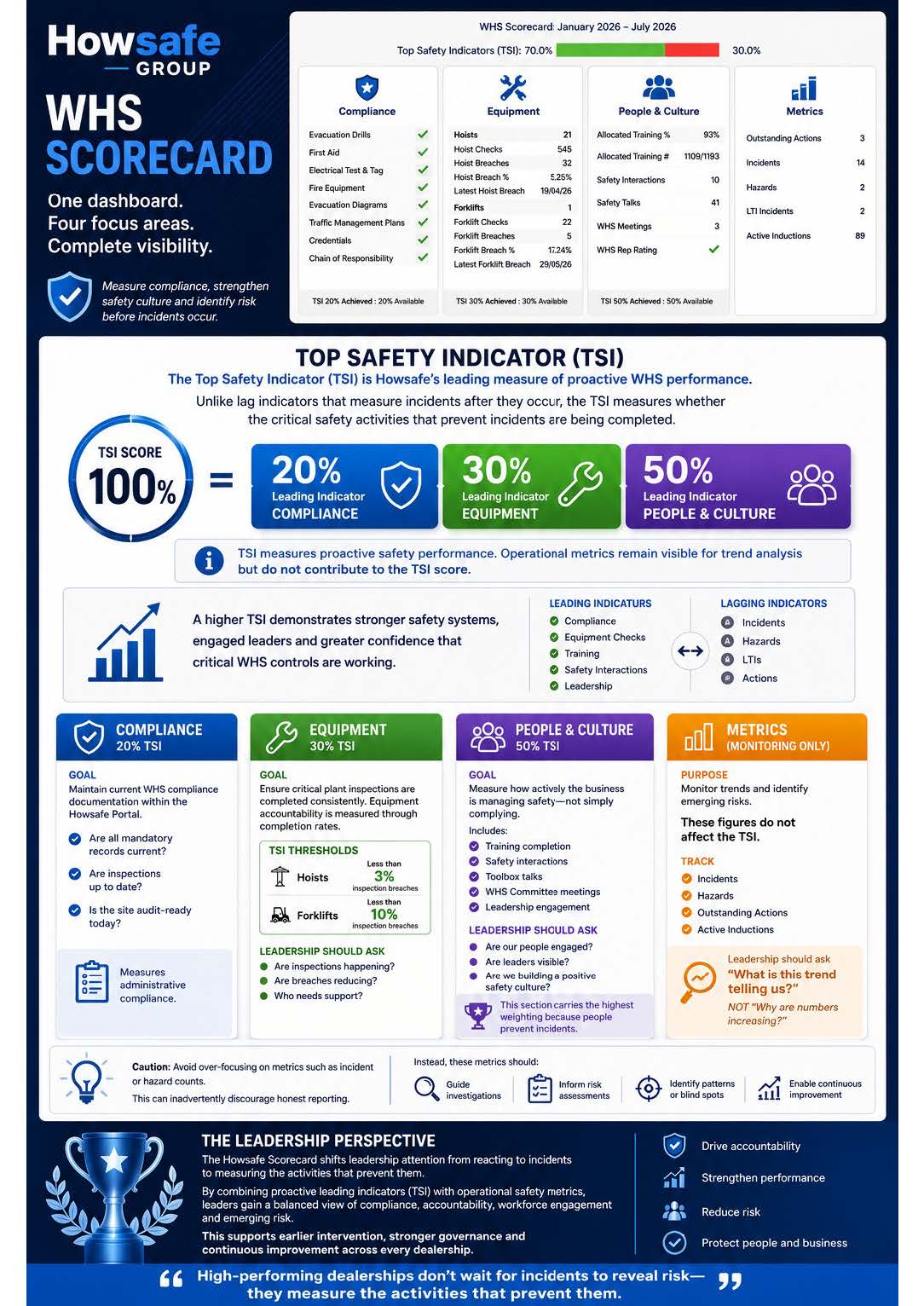
Measure what matters before incidents occur.
This WHS Scorecard is designed to help organisations strengthen safety performance by providing a clear, proactive view of compliance, equipment, people and culture, and key safety metrics. Although the example has been developed for an automotive dealership, the framework can be tailored to suit almost any industry or workplace, making it a valuable tool for businesses committed to continuous safety improvement.